
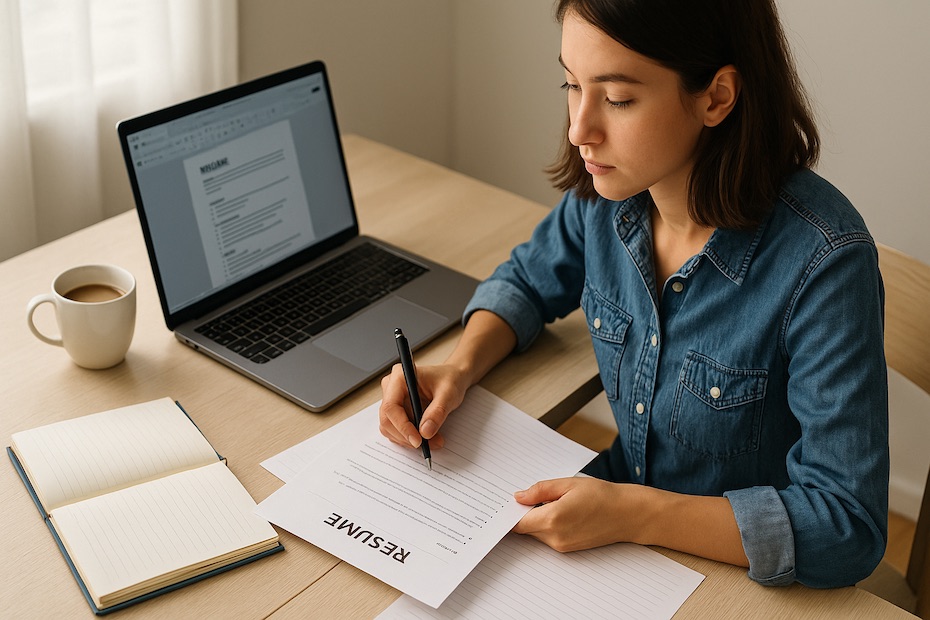
Building your resume while you’re still in school isn’t just possible—it’s one of the smartest moves you can make to set yourself apart before graduation. Employers don’t expect you to have decades of experience, but they do expect you to be intentional about the experiences you gain and how you present them. This guide walks you through exactly how to create a strong resume while you’re still a student, using what you already have and building on it strategically.
Start With What You Know and Do
You don’t need a formal job to have relevant experience. Start by listing your coursework, projects, part-time jobs, and any leadership roles you’ve taken in clubs. Those case studies, group projects, or even a customer-facing job at a café—if framed right—show skills like communication, problem-solving, or time management. You should frame each experience in terms of results or value. Instead of writing, “Worked at campus bookstore,” you might write, “Assisted 50+ students daily with purchases and textbook returns while maintaining 97% accuracy rate during peak season.”
What matters is how you communicate what you’ve done, not just what it was. Use verbs like “led,” “managed,” “created,” “developed,” and “organized.” If you handled customer complaints, took initiative during team assignments, or solved scheduling conflicts, you already have resume-worthy content—you just need to phrase it with purpose.
Translate Classwork Into Achievements
Academic experiences are easy to overlook, but they can be incredibly valuable on a resume when presented correctly. If you’ve taken courses in coding, marketing, data analytics, psychology, or any subject tied to your future field, include them under a “Relevant Coursework” section. Then take it a step further—highlight major assignments that mirror real-world skills.
Let’s say you worked on a group marketing plan or built a prototype for a robotics competition. Break that down into bullet points: What did you do? What tools did you use? What was the result? Think of these as mini case studies that showcase technical skills, collaboration, and critical thinking. Your GPA is just a number. What recruiters really want is evidence you can apply what you’re learning.
Leverage Internships and Micro-Internships
Even if your school doesn’t offer a formal internship program, platforms like Parker Dewey, Forage, and Handshake list paid micro-internships you can do remotely, often on your own schedule. These short projects—ranging from marketing analysis to UX testing—let you build credibility in your field without a long-term commitment. And yes, they absolutely belong on your resume.
If you land an internship, use each week to add to your skill set. Don’t just complete tasks—ask to sit in on meetings, volunteer for stretch projects, or request feedback. Every additional responsibility gives you another bullet point. Internships don’t just build skills; they signal initiative. And with every one, your resume becomes more than a document—it becomes evidence of professional growth.
Make Room for Volunteer Work
You might not be getting paid, but volunteering still counts. If you’ve helped coordinate a blood drive, managed social media for a nonprofit, or tutored high school students in STEM subjects, you’ve done real work—and real work has real resume value. Place it under a “Leadership & Volunteer Experience” section and list it with the same format you’d use for a job.
Don’t understate unpaid experience. Many employers value it just as much, if not more, especially when it aligns with their mission. Volunteering shows commitment, character, and in many cases, project management and communication skills—exactly the things that separate a good candidate from a forgettable one.
Develop Hard Skills on the Side
Recruiters often scan resumes for technical keywords like Python, Adobe Premiere, Excel, Canva, or Google Analytics. You can learn most of these tools online for free or cheap via platforms like Coursera, LinkedIn Learning, or Khan Academy. Add them to a “Skills & Tools” section only if you’ve used them on a real project or assignment.
Don’t just say you “know Excel.” Say you used pivot tables to analyze a dataset in your economics class or created interactive dashboards using Google Sheets. Hard skills are resume currency—but only if they’re backed up by application. Spend 30 minutes a week sharpening one, and you’ll outpace 90% of your peers in terms of resume depth.
Build a Portfolio or Online Presence
If you’re in design, tech, writing, or marketing, your resume should point to an actual portfolio. A simple site on Notion, GitHub, or Wix can house writing samples, code, marketing campaigns, and more. Even business students can showcase case competition decks or pitch videos. Linking your portfolio in your resume header shows employers you’re serious.
Don’t forget your LinkedIn profile. Treat it like your digital resume. Keep your experience aligned with what’s on your paper resume and regularly share class projects or articles related to your major. The more visible you are, the more likely a recruiter will stumble across your profile—and when they do, make sure your content gives them a reason to connect.
Tailor for Every Application
Generic resumes rarely make it past the first glance. Take time to customize your resume for each role you apply to by mirroring keywords from the job listing. If they want someone who can “coordinate events and manage vendor communication,” and you planned a campus event with external speakers, then those are your keywords.
You don’t need to reinvent the wheel for every application. Create a master resume with everything you’ve done, then make job-specific versions from it. The closer your content matches the role, the easier it is for recruiters—and applicant tracking systems (ATS)—to recognize your fit.
How Can You Build a Resume While Still in School?
- Include class projects and leadership roles
- Highlight internships and volunteer work
- Show technical skills through certifications
- Tailor the resume to job postings
- Add a personal portfolio or LinkedIn profile
In Conclusion
Creating a standout resume while still in school is about identifying value in everything you’re already doing and translating that into results employers care about. From classwork to side hustles, internships to volunteer gigs, each experience is an opportunity to build your professional narrative. Start early, be intentional, and keep refining—you’ll graduate with more than a diploma; you’ll have a resume that opens doors.
For more career-building insights and professional development strategies, explore articles on Medium.

Michael E Weintraub is an attorney and founder of the Law Office of Michael E. Weintraub, LLC in Neptune, NJ. With over 25 years of experience in trials, estate planning, and estate administration, he is known for delivering client-focused legal solutions with integrity and precision.