

Immigration law is a field that demands not only legal expertise but also a deep sense of empathy and advocacy. As immigration issues continue to dominate global and national headlines, the role of immigration lawyers becomes increasingly crucial. This article explores the essential components of immigration law education, emphasizing the need for specialized training, practical experience, and the cultivation of compassion and advocacy. By understanding these elements, current and aspiring immigration lawyers can better prepare to navigate the complex and often emotionally charged landscape of immigration law.
The Importance of Specialized Education
Specialized education is fundamental for developing a comprehensive understanding of immigration law. Law schools offer courses that cover a wide range of topics, including asylum, refugee law, family-based immigration, and deportation defense. For instance, the University of Arizona Law provides a robust curriculum that integrates linguistic and legal training, preparing students to handle the multifaceted nature of immigration cases. These programs not only focus on the legal aspects but also on the cultural and social issues that affect immigrants, ensuring that future lawyers are well-rounded and empathetic advocates.
Additionally, programs like the Villanova Interdisciplinary Immigration Studies Training for Advocates (VIISTA) offer online courses designed to educate and train individuals to serve migrants and refugees effectively. These courses cover the legal framework of immigration, practical skills for advocacy, and the ethical considerations involved in representing vulnerable populations.
Practical Training through Legal Clinics
Practical experience is a cornerstone of effective immigration law education. Legal clinics provide students with hands-on experience by allowing them to work on real cases under the supervision of experienced attorneys. For example, the Harvard Immigration and Refugee Clinic (HIRC) partners with Greater Boston Legal Services to offer students opportunities to represent low-income immigrants in deportation and asylum cases. These clinics help students develop essential skills such as client interviewing, legal writing, and courtroom advocacy.
Cornell Law School’s 1L Immigration Law and Advocacy Clinic also provides first-year students with practical experience. Students in this clinic work on cases involving asylum, detention, and removal defense, gaining invaluable insights into the challenges faced by immigrants and the legal strategies required to address these challenges.
Continuous Legal Education and Professional Development
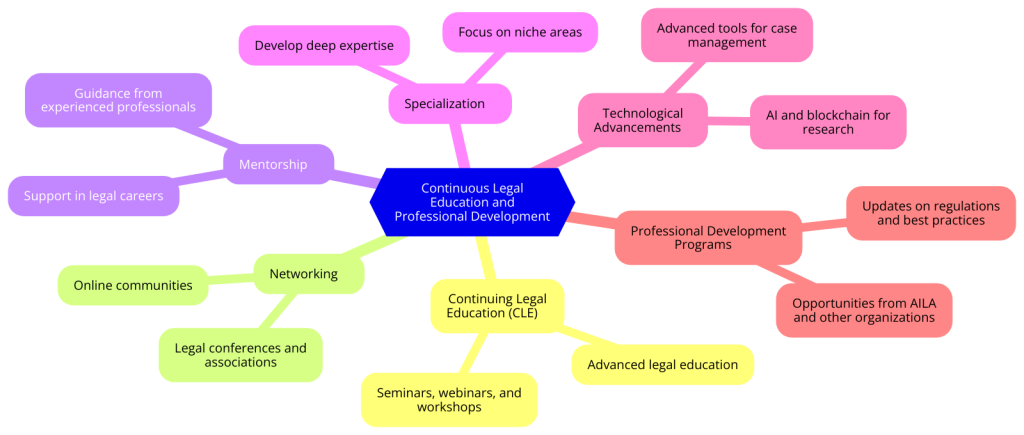
Given the ever-changing landscape of immigration law, continuous professional development is vital. Continuing Legal Education (CLE) programs help lawyers stay updated on new regulations, case law, and best practices. Organizations like the Immigrant Legal Resource Center (ILRC) offer a variety of CLE opportunities, including webinars, seminars, and publications that cover the latest developments in immigration law. These programs ensure that immigration lawyers remain knowledgeable and competent in their practice.
Furthermore, professional development opportunities provided by associations such as the American Immigration Lawyers Association (AILA) offer platforms for networking, advocacy, and policy discussions, helping lawyers to stay engaged with the broader immigration law community.
Technological Advancements and Their Impact
Technology is playing an increasingly important role in the practice of immigration law. Legal professionals must be adept at using advanced tools for case management, electronic filing, and client communication. Technologies such as artificial intelligence (AI) and blockchain are revolutionizing the field by streamlining processes and enhancing the accuracy and security of legal documents.
For instance, AI can assist lawyers in conducting comprehensive legal research and analyzing large volumes of data quickly, while blockchain can provide secure and tamper-proof records of immigration transactions. These technological advancements help lawyers manage their caseloads more efficiently and provide better services to their clients.
Advocacy and Compassion in Practice
Advocacy and compassion are at the heart of immigration law. Lawyers must not only be skilled advocates but also empathetic listeners who understand the emotional and psychological impact of immigration issues on their clients. Programs like those offered by the Immigrant Legal Resource Center emphasize the importance of a holistic and compassionate approach to legal representation, ensuring that lawyers are prepared to address the needs of their clients beyond the courtroom.
Compassion fatigue is a significant challenge in this field, as immigration lawyers often deal with traumatic stories and high-stress situations. Training programs that address mental health and self-care are crucial for sustaining the well-being of lawyers and ensuring they can continue to provide compassionate representation.
Addressing Racial and Social Justice
Racial and social justice issues are deeply intertwined with immigration law. Lawyers must be equipped to address systemic biases and advocate for equitable treatment of all individuals, regardless of their background. Educational programs that focus on cultural competency, anti-discrimination laws, and social justice advocacy are essential for preparing lawyers to fight for the rights of marginalized communities.
By understanding the broader social and political context of immigration, lawyers can better advocate for policies and practices that promote fairness and justice in the immigration system.
In Conclusion
Teaching advocacy and compassion in immigration law requires a comprehensive approach that includes specialized education, practical training, continuous professional development, and a focus on technological advancements. By staying informed about regulatory changes, leveraging new technologies, and maintaining a commitment to advocacy and compassion, immigration lawyers can effectively navigate the complexities of their field and provide high-quality legal services to those in need. As the landscape of immigration law continues to evolve, ongoing education and a dedication to justice will be key to ensuring fair representation for all.

Michael E Weintraub is an attorney and founder of the Law Office of Michael E. Weintraub, LLC in Neptune, NJ. With over 25 years of experience in trials, estate planning, and estate administration, he is known for delivering client-focused legal solutions with integrity and precision.